Walkie TalkieSocial voice app · GenZ2021 · 2023Founding · UI/UX · Motion

The beloved walkie-talkie, reborn as a social network for GenZ.

Walkie-Talkie is a place where GenZ can talk and meet with anyone without having to worry about how they look. I led the redesign that transformed a prank-call toy with 1% retention into a voice-first social network that reached 21 million users and a 63.8% 30-day retention.

Role

Founding · Product · UI/UX · Motion design

Category

Consumer mobile · Social · Voice

Audience

Primarily female GenZ (18 – 24)

Outcome

1% → 63.8% 30-day retention · 21M users

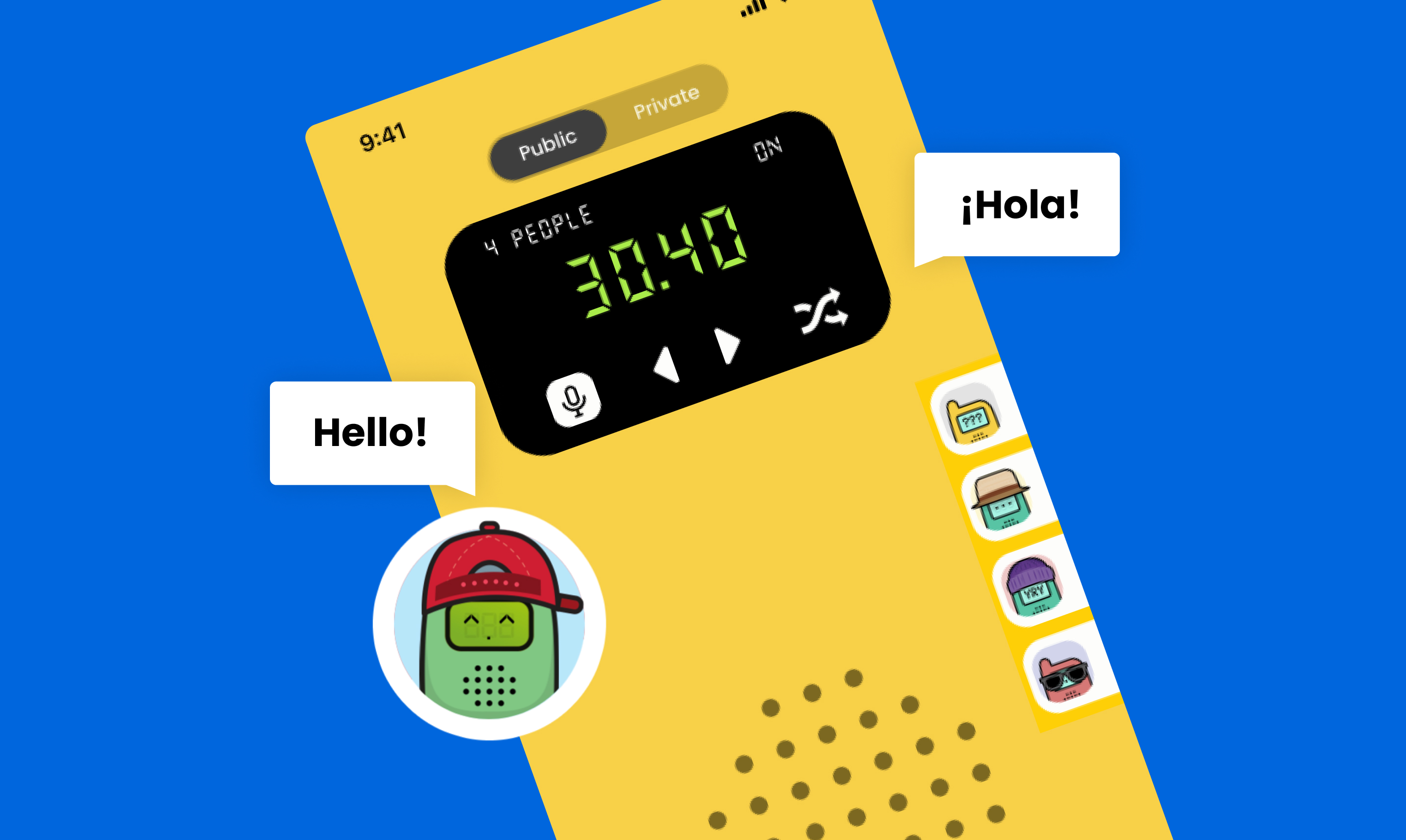
Walkie Talkie · yellow radio interface with chat bubbles and avatars
01 · Problem

Great downloads, but nobody stayed.

The app was originally built as a walkie-talkie tool for friend groups · especially for pranking. Downloads were very high, but user engagement dropped to 1% after 30 days. The product needed a reason to come back.

"People loved the novelty for a day. The second day, there was nothing to open the app for."

The redesign brief: turn a one-trick novelty into a reason to return.

02 · Research

Personas, mood boards, and a retro-vibe community.

I built persona profiles to identify the context of use and motivations beyond prank calls. Visual mood boards gave us direction for branding · a retro-vibe community of people looking to express themselves and meet.
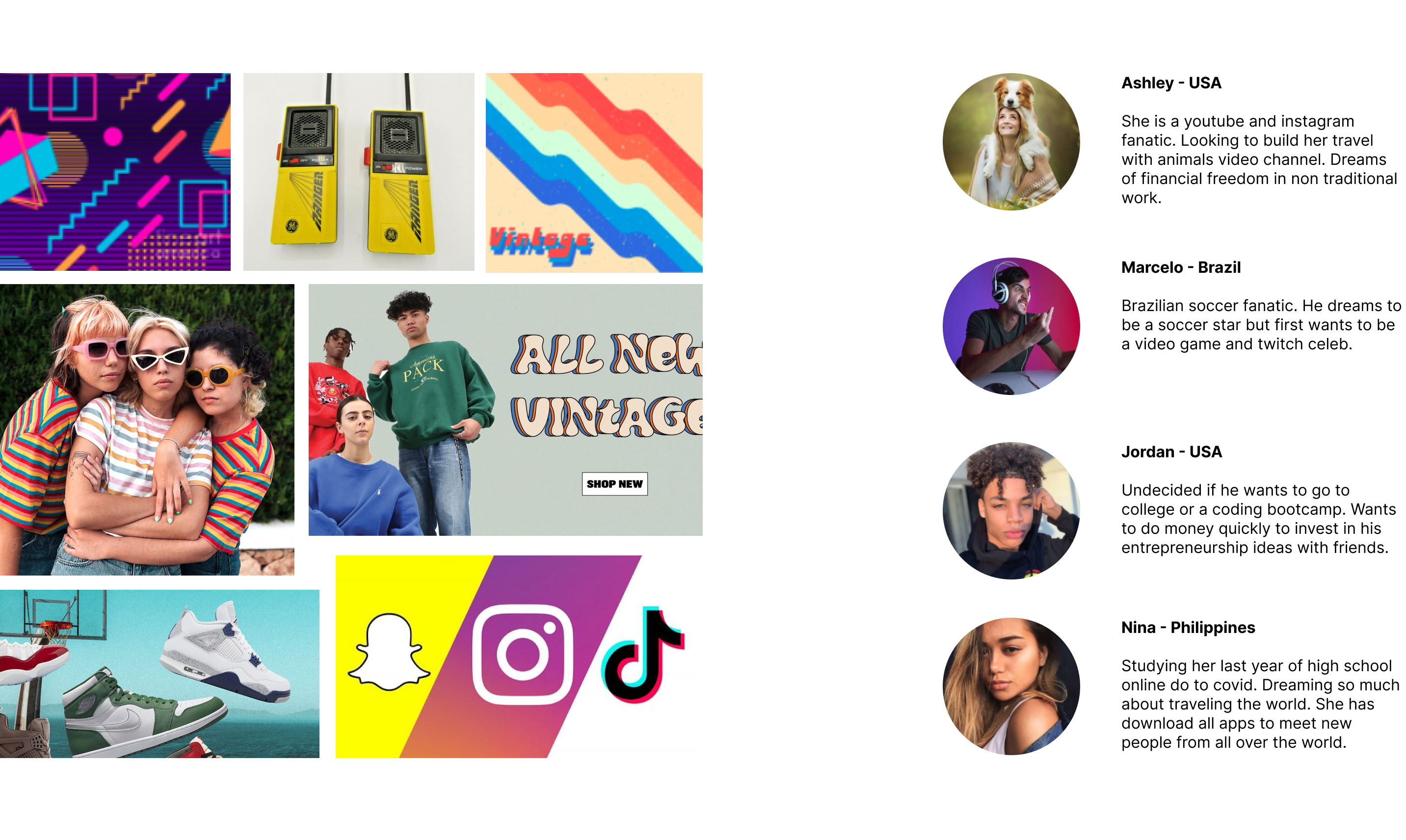
Walkie Talkie · personas and mood boards · GenZ references and user profiles
Personas and visual direction · a retro-vibe community of people looking to express themselves and meet
03 · Competitive analysis

User connections and personalization were clear opportunities.

A competitive analysis against top-tier apps in the same sector · Zello, Voxer, WT Now, Two Way · identified gaps in user connection and personalization. Nobody was treating voice as a place to belong.
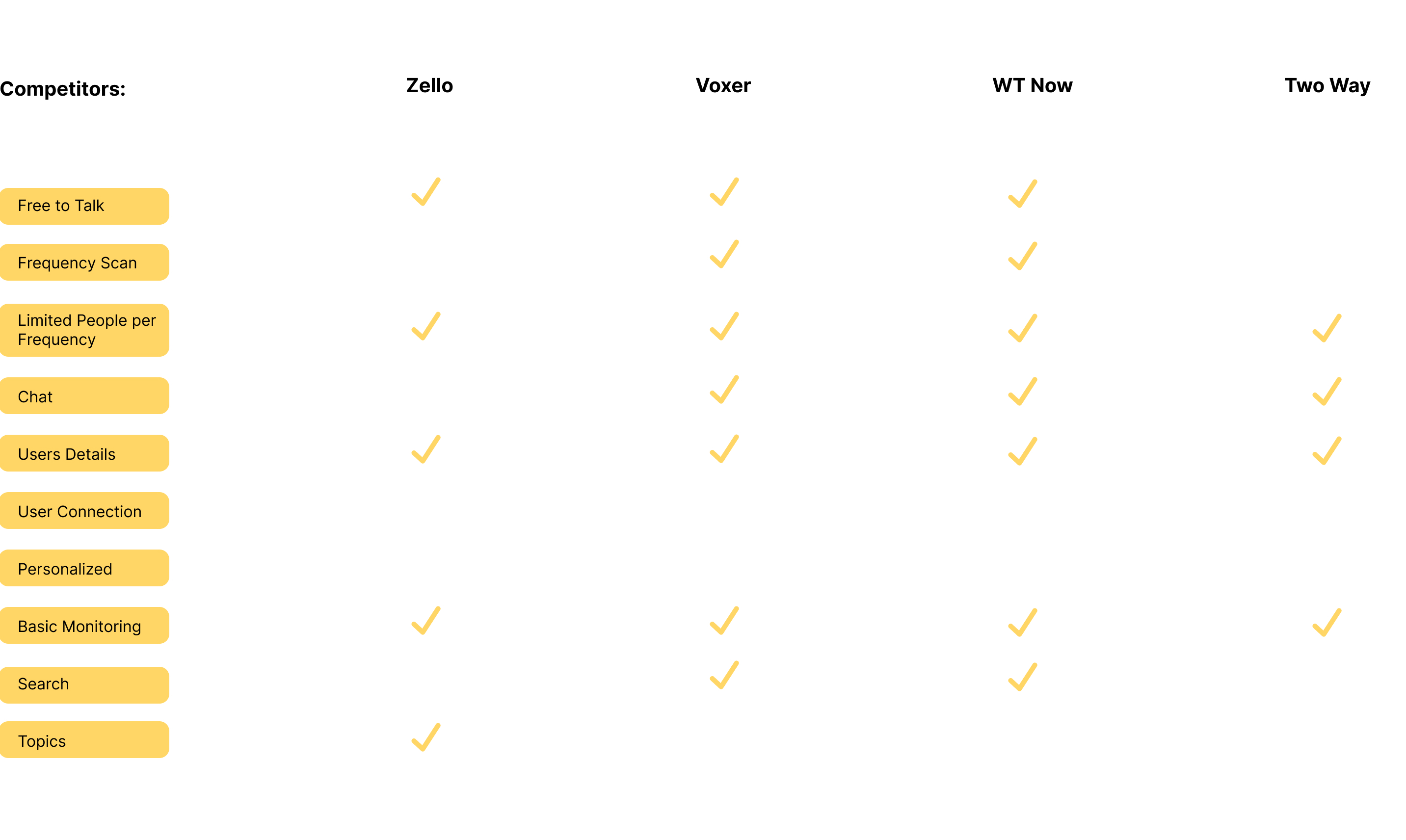
Competitive feature matrix comparing Walkie Talkie to Zello, Voxer, WT Now and Two Way
Competitive matrix · Zello · Voxer · WT Now · Two Way
04 · Audience

GenZ women, looking for spontaneous connection.

Our audience was primarily female GenZ (18 – 24). Most were looking for spontaneous connections · a surprise finding. Users wanted to meet new people, not just reach known friends.
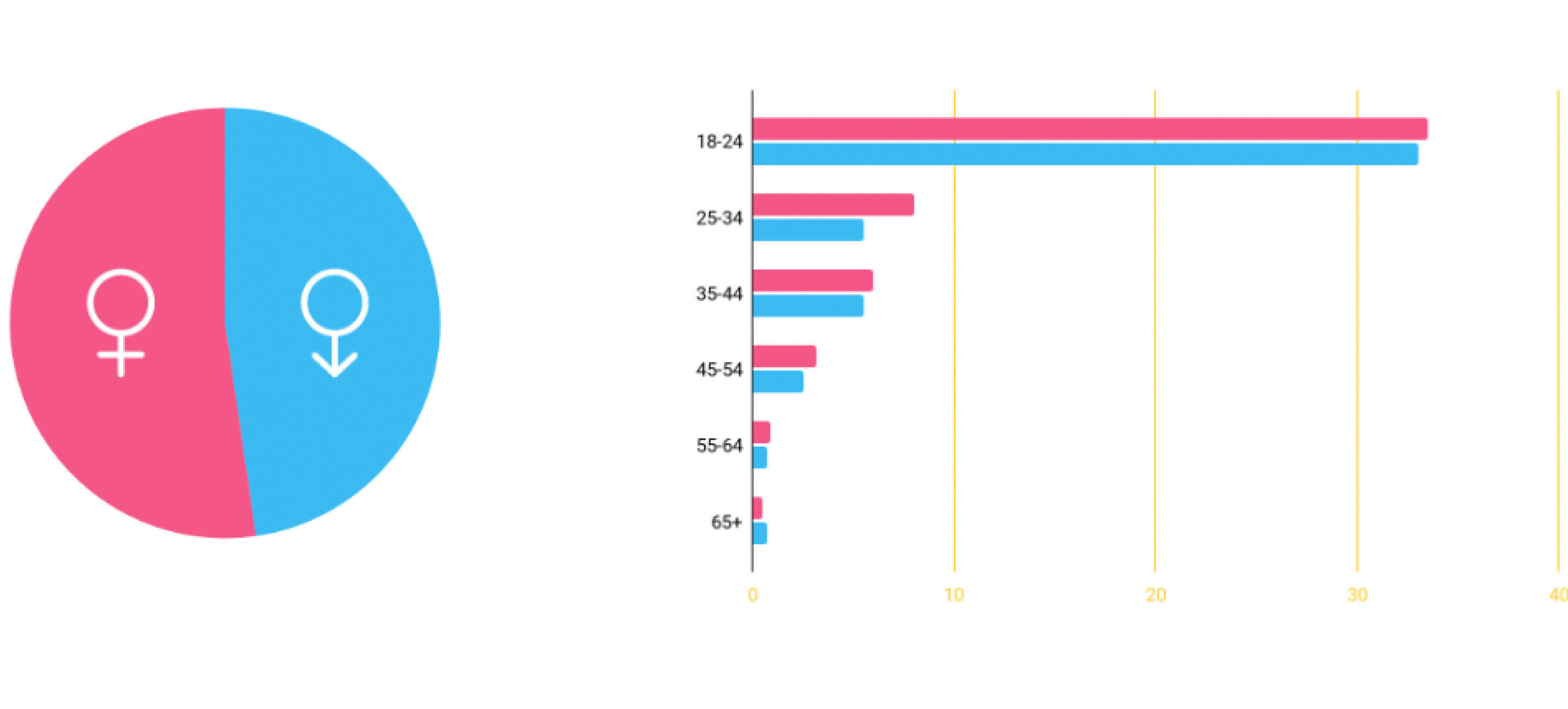
Audience breakdown · gender split and age distribution bar chart
Audience · 18 – 24 was the dominant cohort across both genders
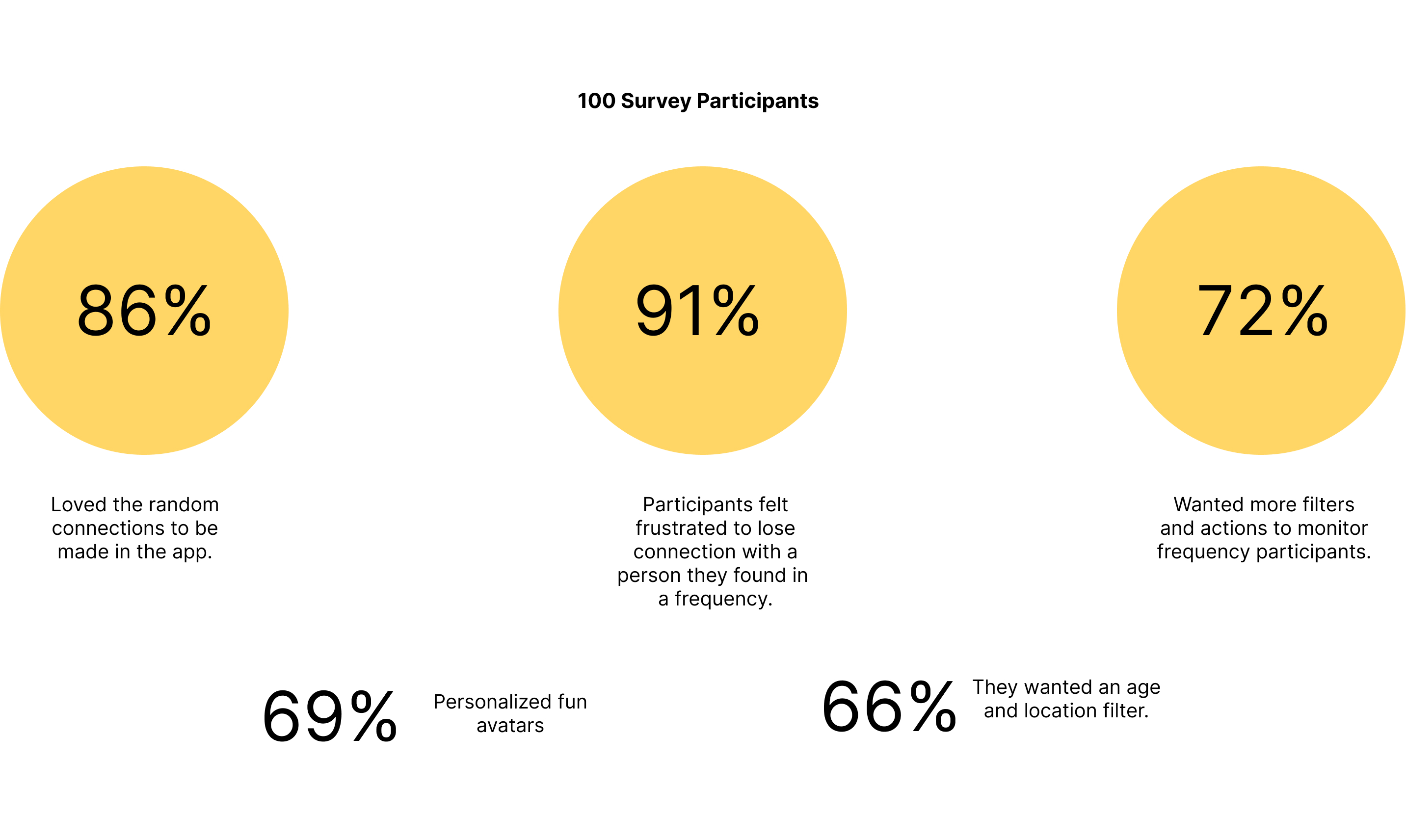
Survey results · 100 participants · random connections, personalized avatars, monitoring filters
100 survey participants · the signal was loud and consistent
86%
Loved the random connections made in the app
91%
Frustrated to lose connection with someone they found
72%
Wanted more filters to monitor frequency participants
69%
Asked for personalized, playful avatars
05 · Wireframes & prototypes

Low-fi wireflows, tested in small groups.

I built low-fidelity wireframes and user flows, then tested them with groups of 10 users each · gathering feedback on which features would actually drive engagement.
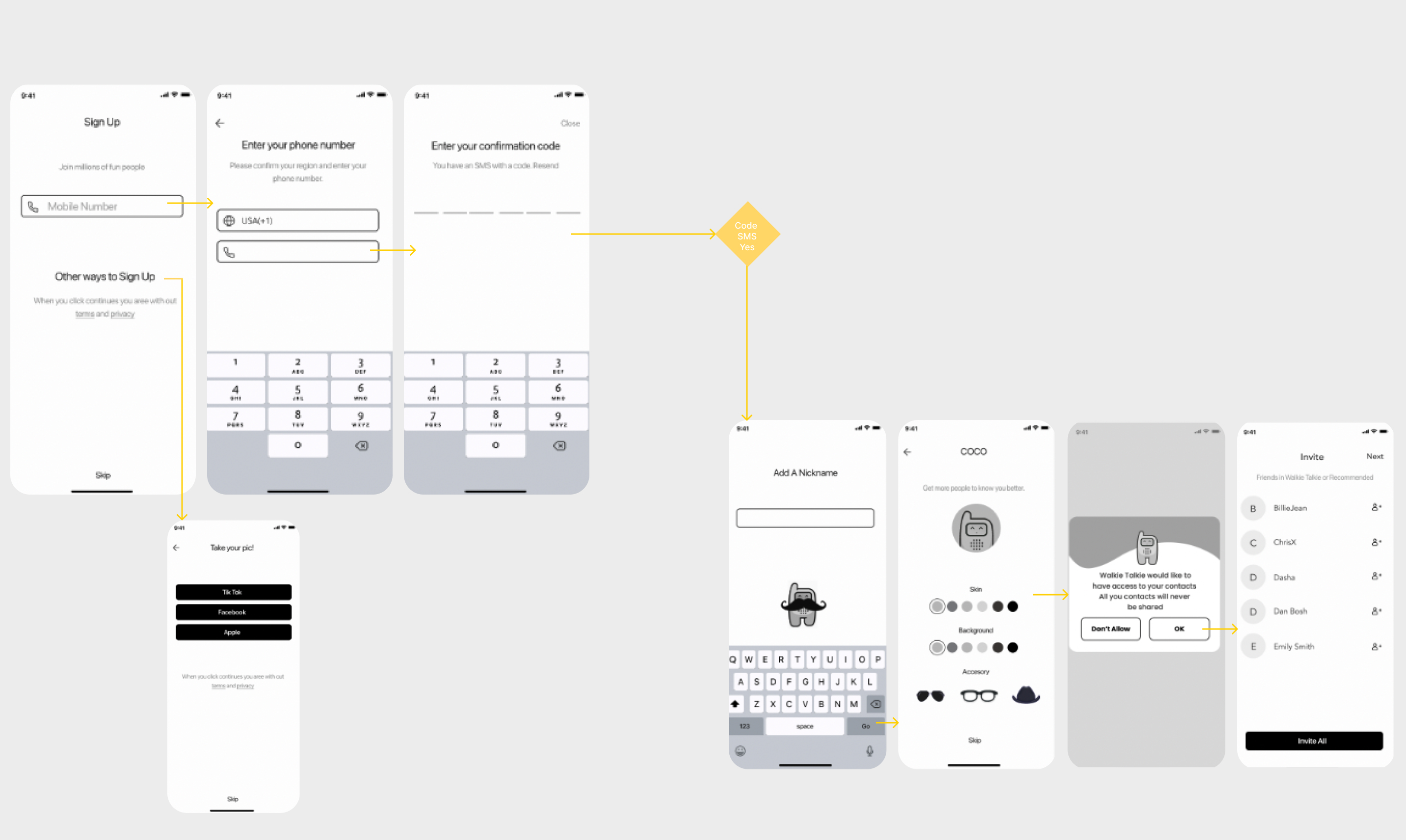
Onboarding user flow · sign up, phone number, confirmation, nickname, avatar, permissions, invite
Onboarding wireflow · sign up → verify → personalize → invite
06 · Brainstorming & prioritization

What the team heard back.

We ran brainstorming sessions to evaluate user feedback and shape the feature set. Discoverability, monetization, moderation, topics and onboarding became our five pillars.
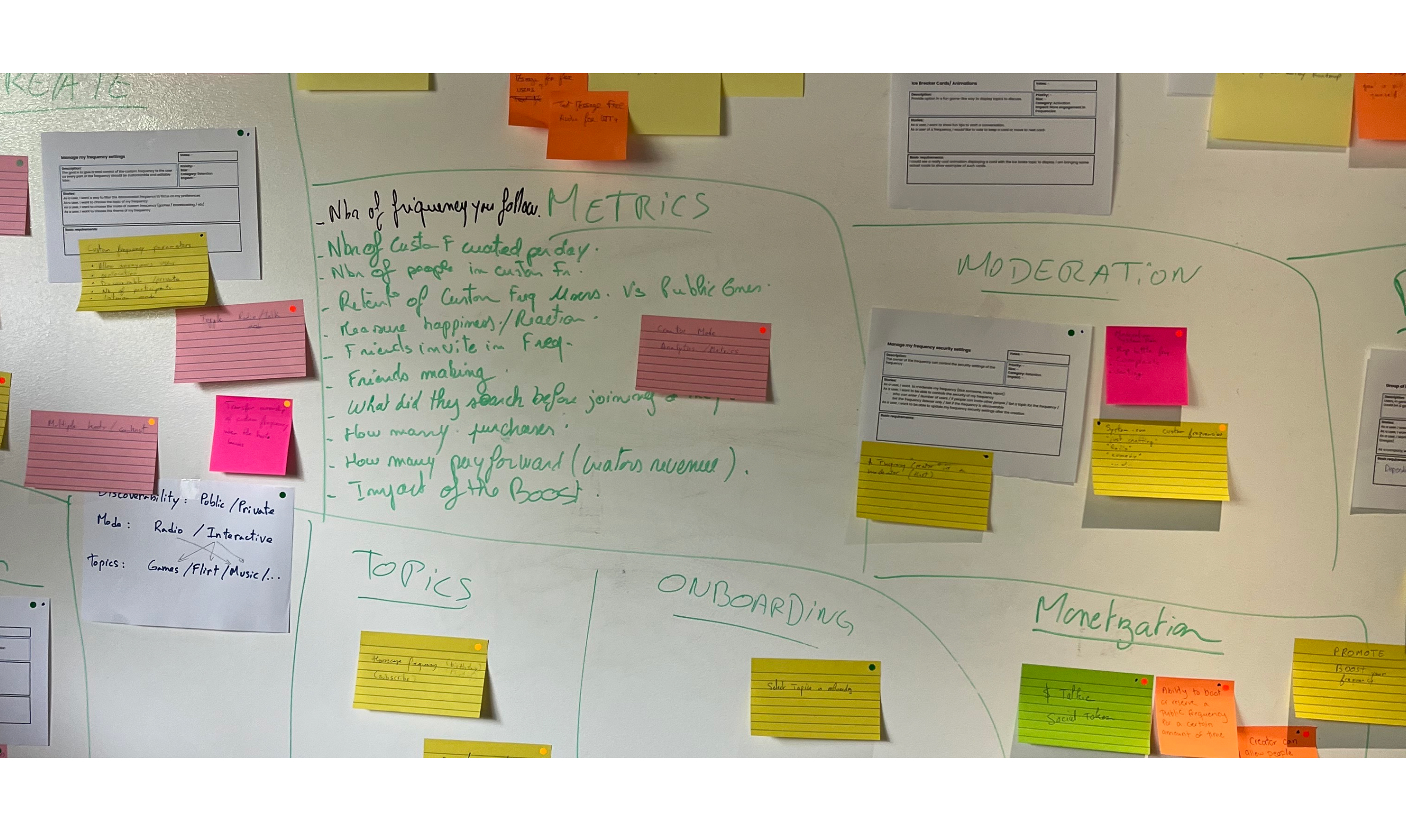
Whiteboard brainstorming session · sticky notes grouped by metrics, moderation, onboarding, topics, monetization
Team brainstorm · clustering insights into five product pillars
"
Users wanted to connect with random people, have monitoring capabilities, and build a safe community of people they would otherwise never meet.
· Research synthesis · post-brainstorm
07 · Onboarding

Simple sign-up and quick personalization.

We offered a simple sign-up / verification and a quick, playful personalization step so users could express themselves before ever talking. 78% of downloads converted to accounts.
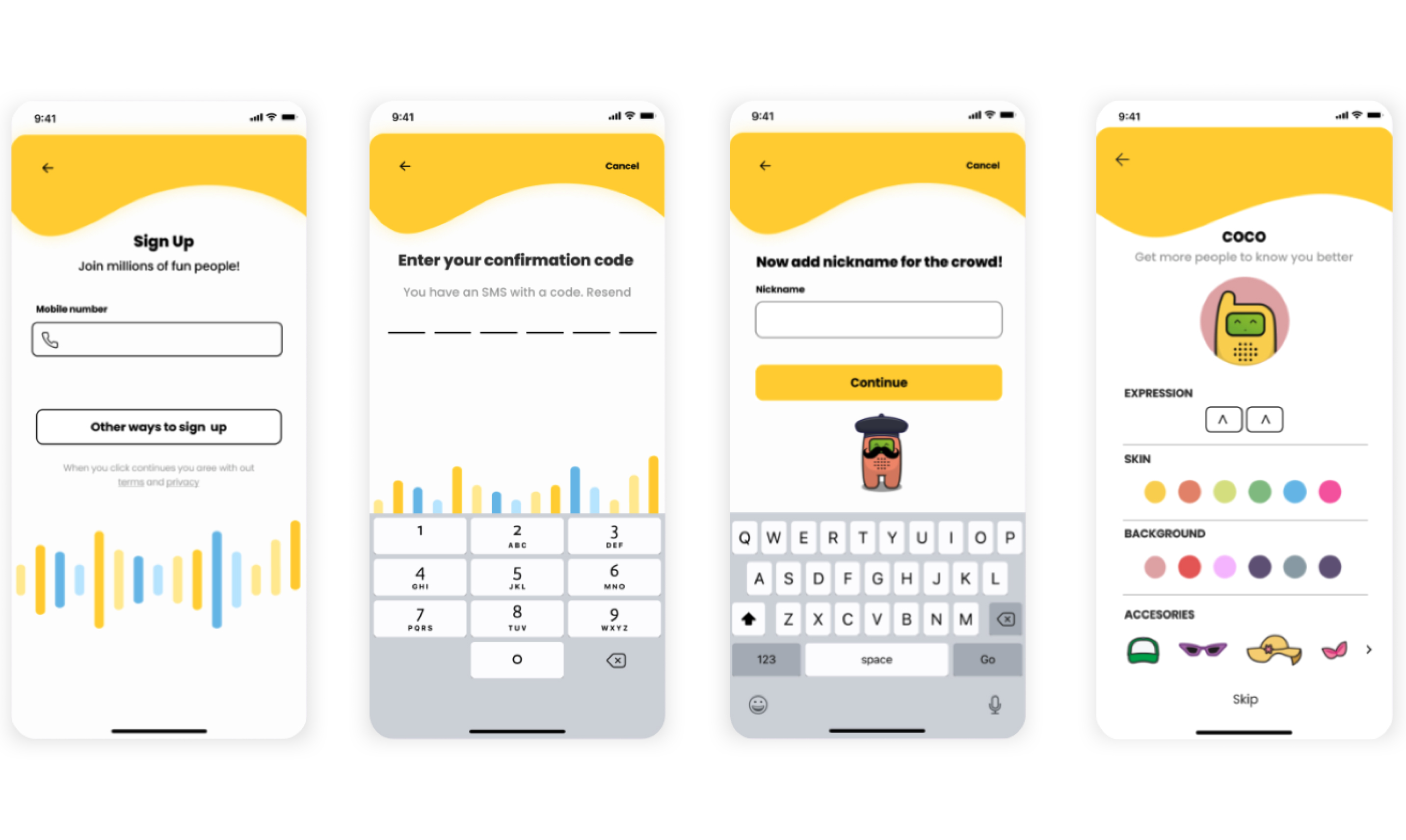
Four onboarding screens · sign up, confirmation code, nickname, avatar customization
Sign up · confirmation · nickname · avatar · playful by the fourth screen
08 · It's social

From walkie-talkie tool to social network.

We moved from a walkie-talkie tool to a social-network experience. It became easy to connect with anyone you care about · and to quickly understand the vibe of a frequency before tuning in.
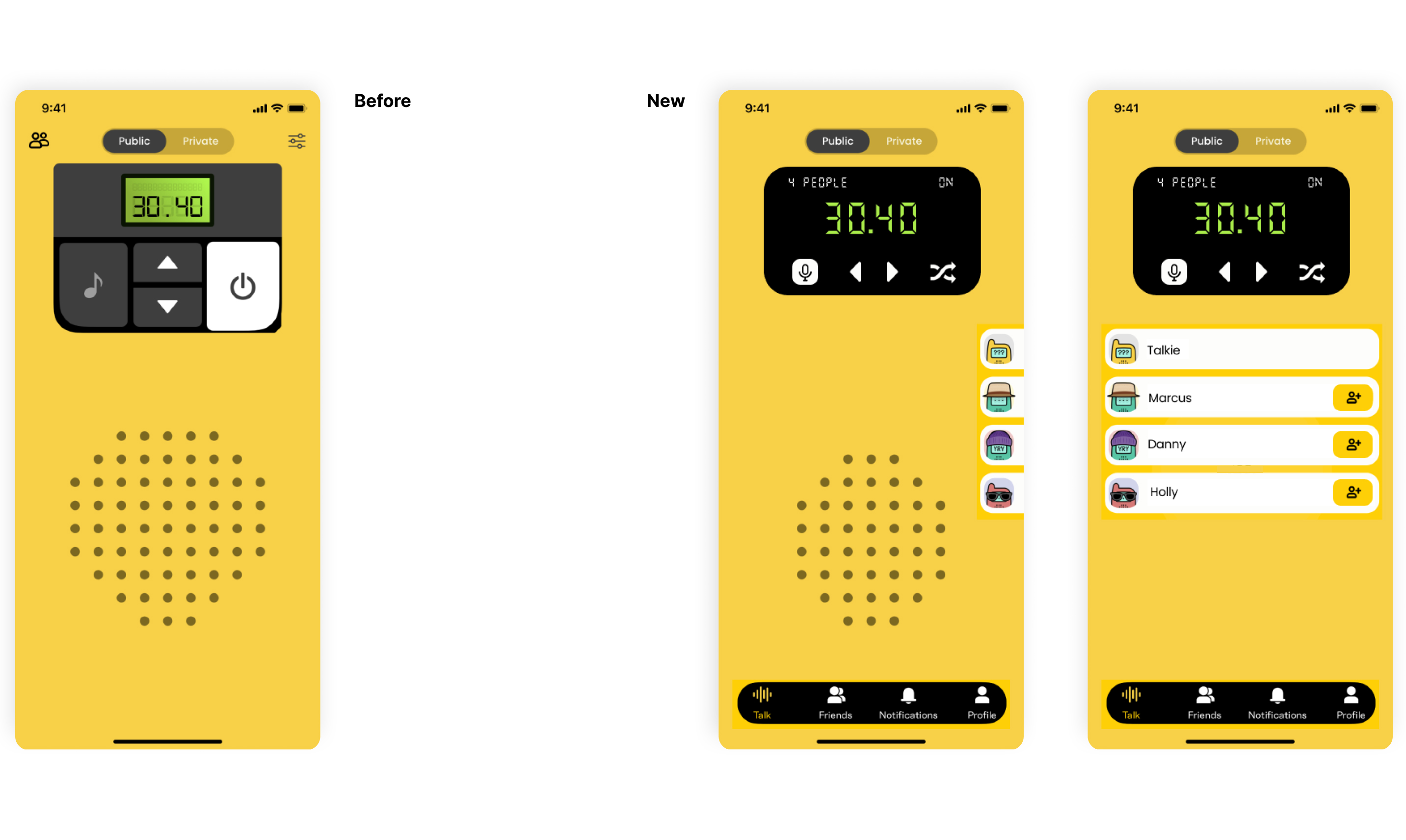
Before/after · old radio-style screen vs new social frequency with avatar list
Before → after · the same frequency, now with people attached to it
09 · Safe & fun community

Safety baked in from day one.

Creating a fun and safe app was a top priority. We added easy-to-use monitoring filters, clear community guidelines, and technology to identify abusive behaviour patterns. "Be kind" wasn't a tagline · it was an onboarding step.
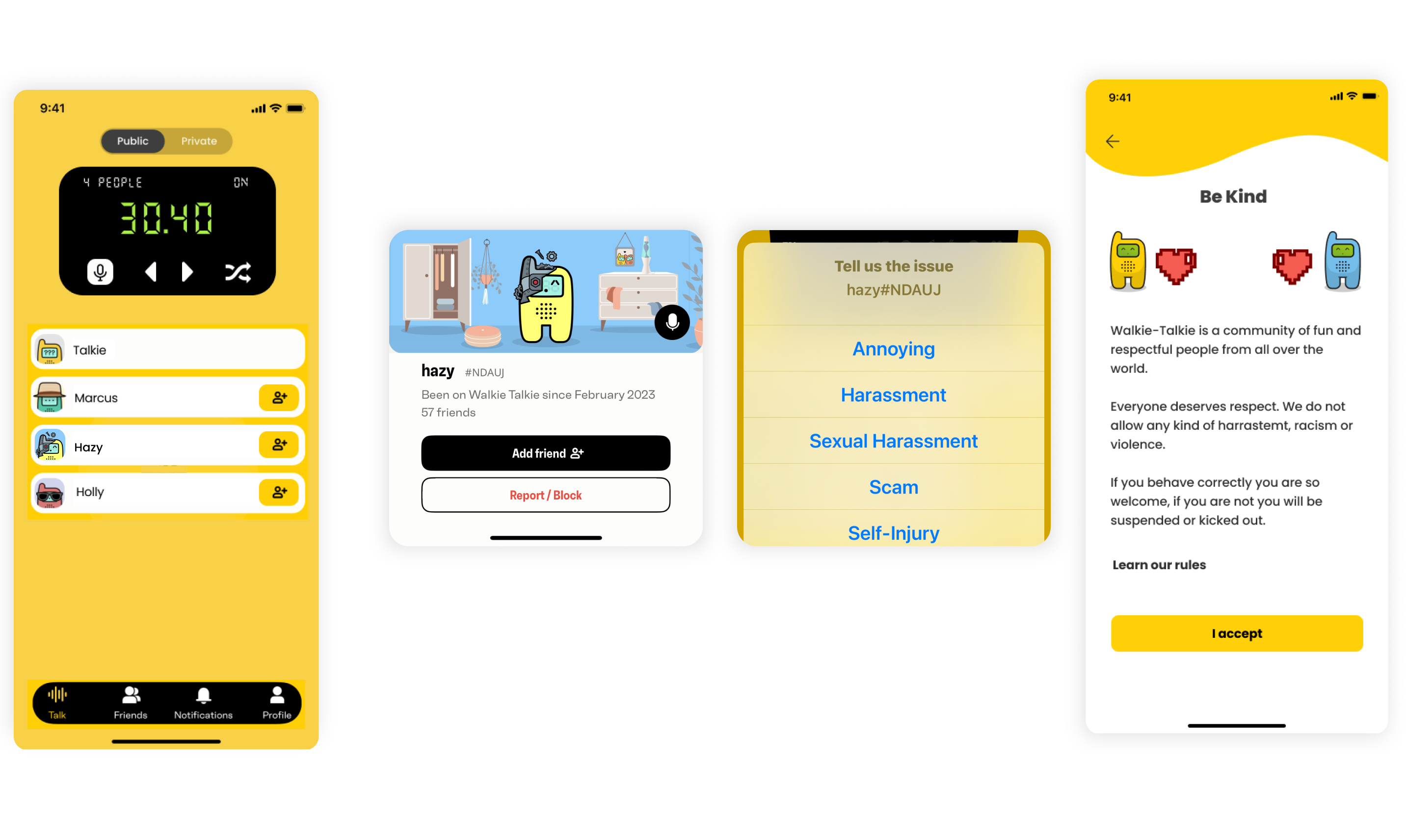
Safety flow · user profile, report / block, reason selection, Be Kind community agreement
Report · reason · community agreement · friction where it belongs
10 · Accessories

The mascot became a playful avatar.

The walkie-talkie mascot became a playful avatar · so users could focus on how they talk, not how they look. We experimented with paid accessories (hats, sunglasses, hair) with strong success.
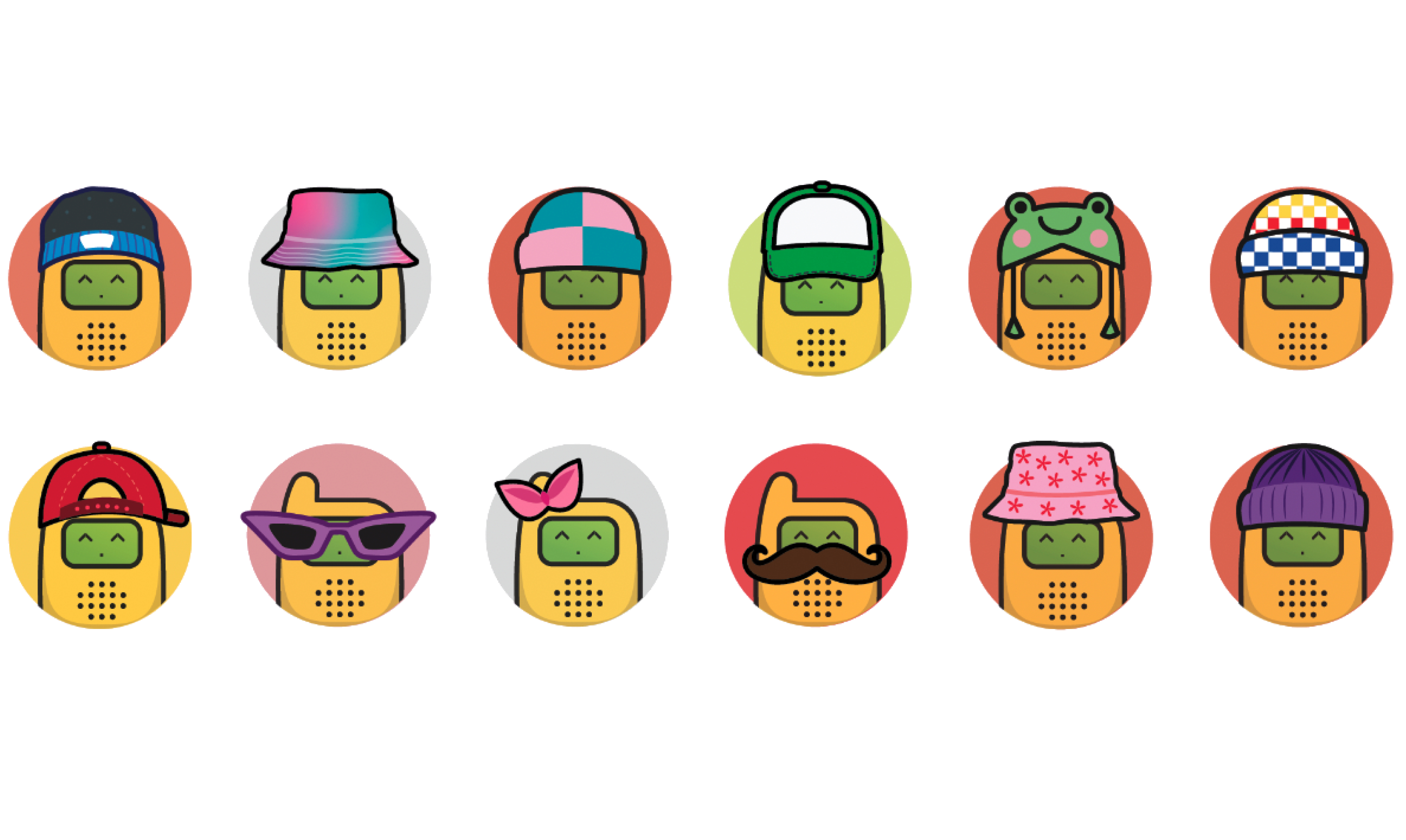
Grid of 12 walkie-talkie mascot avatars wearing different hats, sunglasses and accessories
A dozen avatars · the start of a small monetizable identity system
11 · Product success

1% → 63.8% retention.

The main goal of the first redesign was to lift 30-day retention from 1%. After launch, the numbers settled at an average of 63.8% on a 30-day cycle for users with 1+ friends · and 90%+ for users with 10+ friends.

Walkie-Talkie reached the App Store top charts in the US, France, Brazil, Turkey and many other countries · and grew to 21 million users.
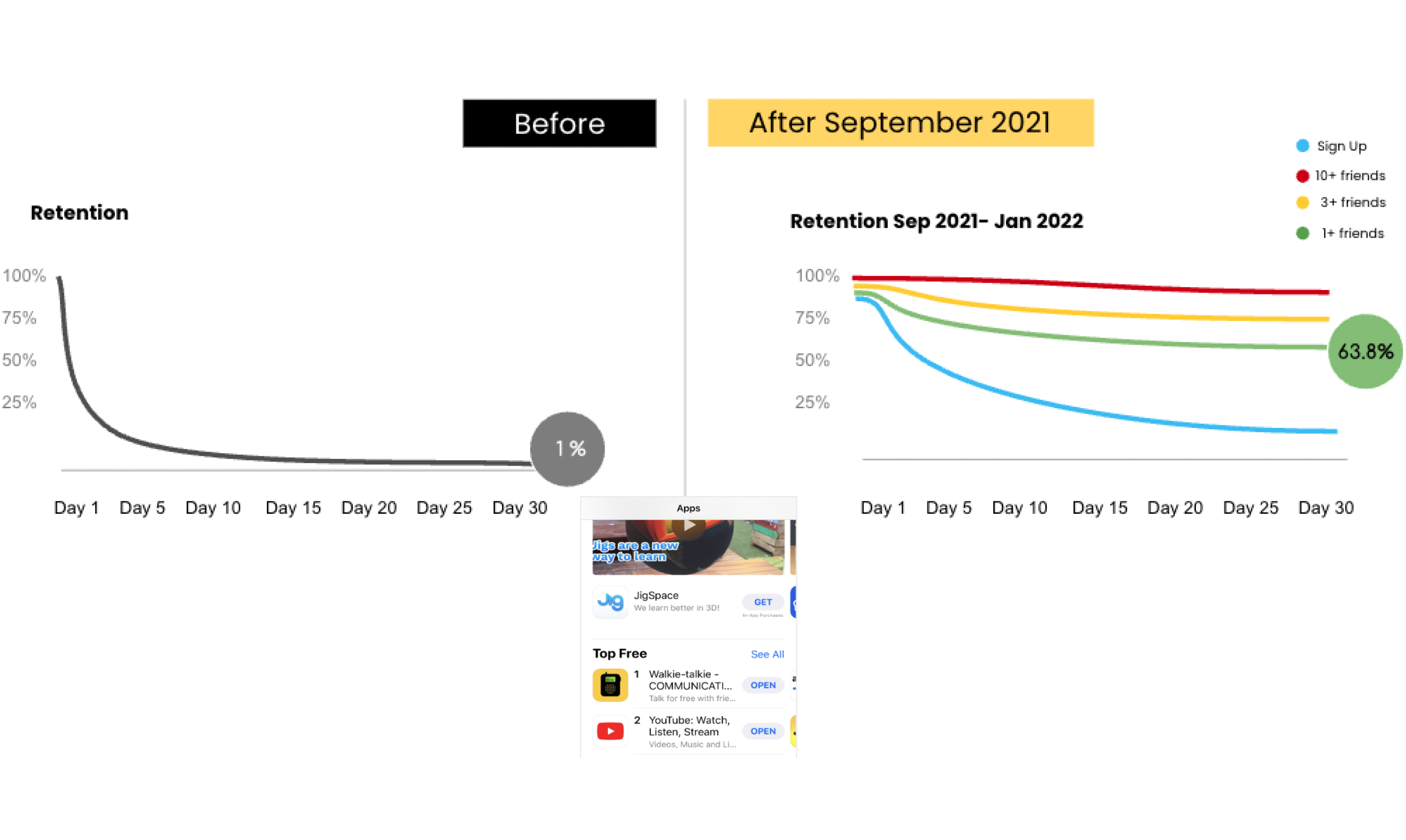
Retention chart · 1% baseline vs 63.8% after redesign, with App Store Top Free callout
Before / after retention · with a brief appearance at #1 Top Free
21M
Total users reached globally
63.8%
30-day retention post-redesign (1+ friends)
78%
Download-to-account conversion
#1
Top Free · multiple countries
12 · Reflection

Retention is a product shape, not a tactic.

Walkie-Talkie taught me that retention isn't something you bolt on with notifications · it's the shape of the product itself. Moving from a tool to a social network required changing what the app was, not just how it looked. The mascot, the avatars, the "Be Kind" agreement, and the frequency-as-room metaphor were all one decision: give people a reason to come back tomorrow.

Back to work · 01 / 05
Sole Designer · 2024